A drip campaign is a limited series of automated emails. The emails go out on a schedule
or after a person takes an action. Each email builds on the one before it, so the reader gets
information in small steps instead of all at once.
This guide explains what a drip campaign is, how it differs from a mass email and from
email automation, and when to use one. You will also get a five-step setup plan, two
sample timelines (one for B2B, one for B2C) and tips for keeping the campaign healthy. All
examples are invented, so adapt them to your business.
What is a drip campaign?
A drip campaign sends a planned set of emails over days or weeks. The name comes from
the idea of "dripping" information to the reader a little at a time. Each message has one
job, such as welcoming the reader, teaching one idea or inviting them to take a step.
Two other terms mean almost the same thing. Drip marketing is the wider practice of
using drip campaigns, and it sometimes includes channels other than email. An email drip
campaign, or drip email campaign, is simply a drip campaign that uses email. In this guide
we use "drip campaign" for all three.
A drip campaign can start in two ways. A time-based drip sends emails on a fixed
schedule after the reader enters the series, for example on day 1, day 3 and day 7. An
action-based drip starts or changes course when the reader does something, such as
clicking a link. Many campaigns combine both.
Drip campaign vs. mass email vs. email automation
These three terms overlap, so a clear comparison helps. A drip campaign is one kind of
email automation. Email automation is the wider idea of sending emails when a rule is met.
Our guide to email automation covers that wider idea.
Aspect | Mass email | Drip campaign | Email automation |
|---|---|---|---|
What it is | One email sent to many people at once | A short series of planned emails | Any email sent when a rule or trigger is met |
Timing | One date you choose | A schedule or a set of actions | Whenever the trigger happens |
Reader experience | Everyone gets the same message together | Each reader moves through the series at their own pace | Each reader gets the email that matches their action |
Example | A monthly newsletter | A four-email welcome series | A receipt after a purchase |
Why use drip marketing?
A drip campaign helps when one email is not enough. Readers often need more than one
message to understand an offer, trust a brand or take the next step. Teams use drip
campaigns for four main goals.
Convert: guide new leads or subscribers toward a first purchase or a conversation.
Encourage repeat purchases: remind customers of related products or helpful tips
after they buy.
Re-engage: reach people who have gone quiet and invite them back.
Nurture: share useful information until a lead is ready to talk to your team.
A drip campaign also saves time. You write the series once, set the rules and let the tool
send each email at the right moment. You still need to review the results and improve the
emails.
5 drip campaign use cases
Use case | Typical trigger | Goal of the series |
|---|---|---|
Welcome series | Someone subscribes or creates an account | Introduce the brand and set expectations |
Onboarding series | A new customer or user signs up for a product | Help them reach their first success |
Lead nurturing | A lead downloads a resource or asks a question | Build trust with useful content |
Abandoned cart | A shopper leaves items in a cart | Remind and remove doubts |
Win-back | A customer or subscriber has gone quiet for a set period | Find out whether they still want to hear from you |
How to set up an email drip campaign in 5 steps

1. Set a goal. Choose one result for the series, such as "book a demo" or "make a first
purchase." Write it down, and decide how you will measure it.
2. Define the audience. Decide who enters the series and who does not. A new
subscriber and a long-time customer need different emails, so build separate series
when their needs differ.
3. Choose the trigger. Decide what starts the series, for example a sign-up form or a
download. Also decide what ends it. A reader who reaches the goal should leave the
series.
4. Write the content. Give each email one purpose and one call to action (CTA). Space
the emails so readers have time to act. Write the subject line last, so it matches the
email.
5. Monitor and improve. Check results after the series has run for a while. Look at clicks,
replies and goal completions. Change one thing at a time so you can see what made the
difference.
Sample drip campaign timelines
These timelines are invented examples. Use them as a starting point, then adjust the
timing to match how your readers behave.
B2B example: a five-email drip over 14 days
Imagine a company that sells scheduling software to small clinics. A clinic manager
downloads a guide to reducing missed appointments.
Day | Purpose | CTA | |
|---|---|---|---|
Day 0 | Here is your guide | Deliver the resource and say what comes next | Invite the reader to a short demo |
Day 2 | One quick win from the guide | Share one useful tip | Read the tip |
Day 5 | How other clinics approach reminders | Offer a short example or a customer-approved story, if you have one | Read the story |
Day 9 | Common questions about switching tools | Answer the main doubts | See the FAQ |
Day 14 | Want to see it with your own schedule? | Invite the reader to a short demo | Book a demo |
Use a real customer story only if you have permission and can show the source. If you
have none, replace the Day 5 email with a short how-to.
B2C example: a four-email drip over 10 days
Imagine an online shop that sells home coffee equipment. A visitor joins the mailing list to
get a brewing guide.
Day | Purpose | CTA | |
|---|---|---|---|
Day 0 | Welcome and your brewing guide | Deliver the guide and say how often you will write | Get the guide |
Day 3 | Three mistakes that spoil a cup | Teach something useful | Read the tips |
Day 6 | Our most popular starter kits | Show products that match what the reader read | See the kits |
Day 10 | A small thank-you for joining | Offer a discount, only if you plan to offer one | Shop now |
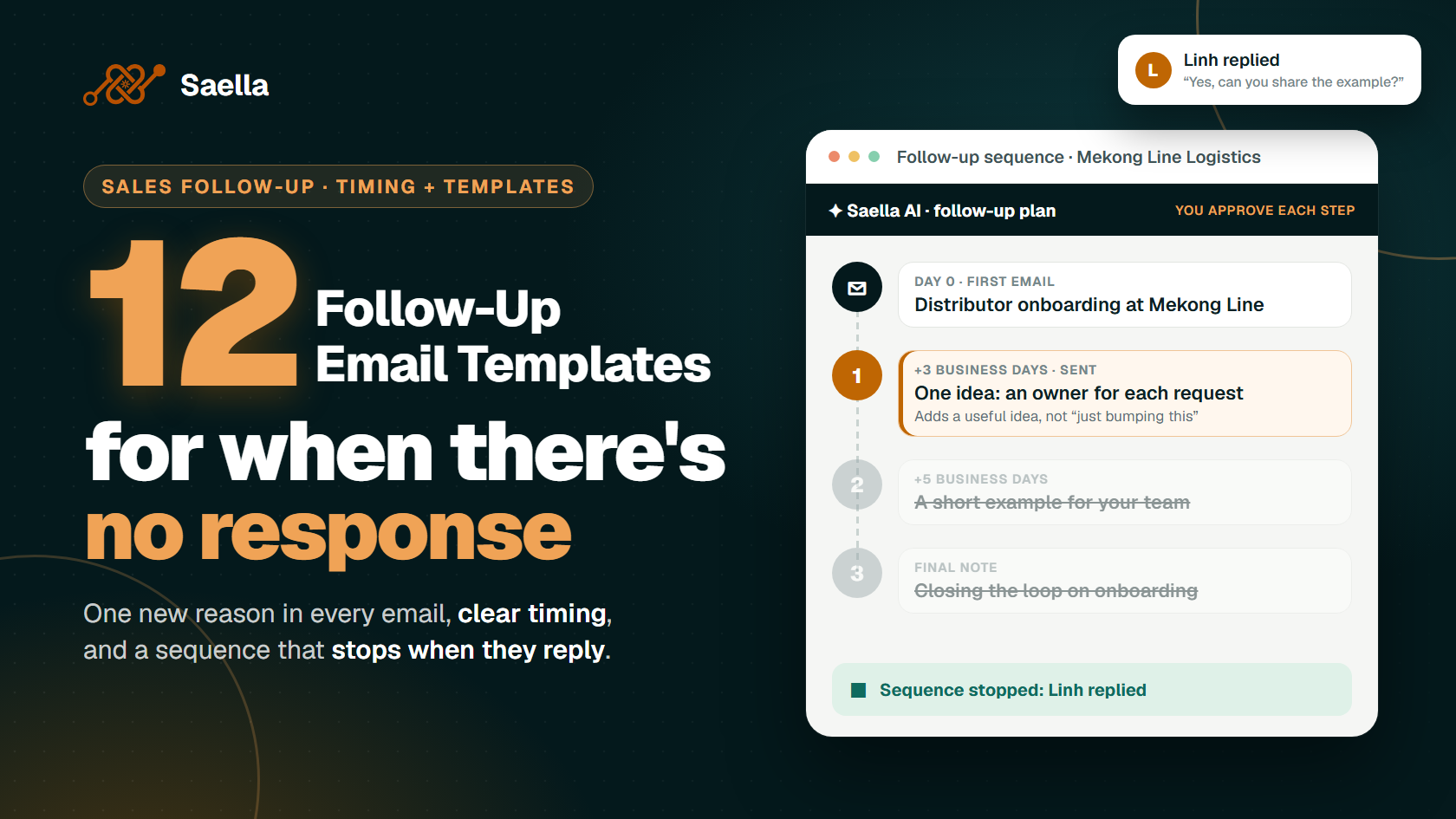
Add exit rules to both timelines. If a reader books a demo or buys a kit, they should leave
the series. Otherwise, they may get a sales email for something they already have.
Sample drip email copy
Here is one email from each timeline, so you can see how a single email stays focused. The
names and details are invented.
B2B, Day 2 (subject line: "One quick win from the guide"):
Hi Linh, last time you downloaded our guide to missed appointments. The fastest
change in it is also the simplest: send a reminder the day before each visit. Clinics can
set this up in an afternoon.
B2C, Day 3 (subject line: "Three mistakes that spoil a cup"):
Hi Hana, thanks for joining us. Most home brewers make the same three mistakes:
water that is too hot, a grind that is too fine and a cup that is too small for the brew.
Both emails open with the reader's situation, deliver one useful idea and end with one
CTA. Neither email asks for a sale. That matches the purpose of the middle of a series,
which is to build trust.
Common drip campaign mistakes
Writing too many emails. Each email needs a purpose, or the reader will lose interest.
Skipping exit rules. A reader who has already bought should not get a "buy now" email.
Mixing goals. A series that tries to teach, sell and survey at once confuses the reader.
Never reviewing the series. Offers end, links break and products change.
Using hard-sell language in the first email. Give value first and ask for action later.
Tips to keep your drip campaign healthy
Keep your list clean
A drip campaign is only as good as the list behind it. Remove addresses that bounce.
Consider removing people who have not opened or clicked in a long time, after you try to
win them back. A smaller, engaged list gives you cleaner results.
Protect your deliverability
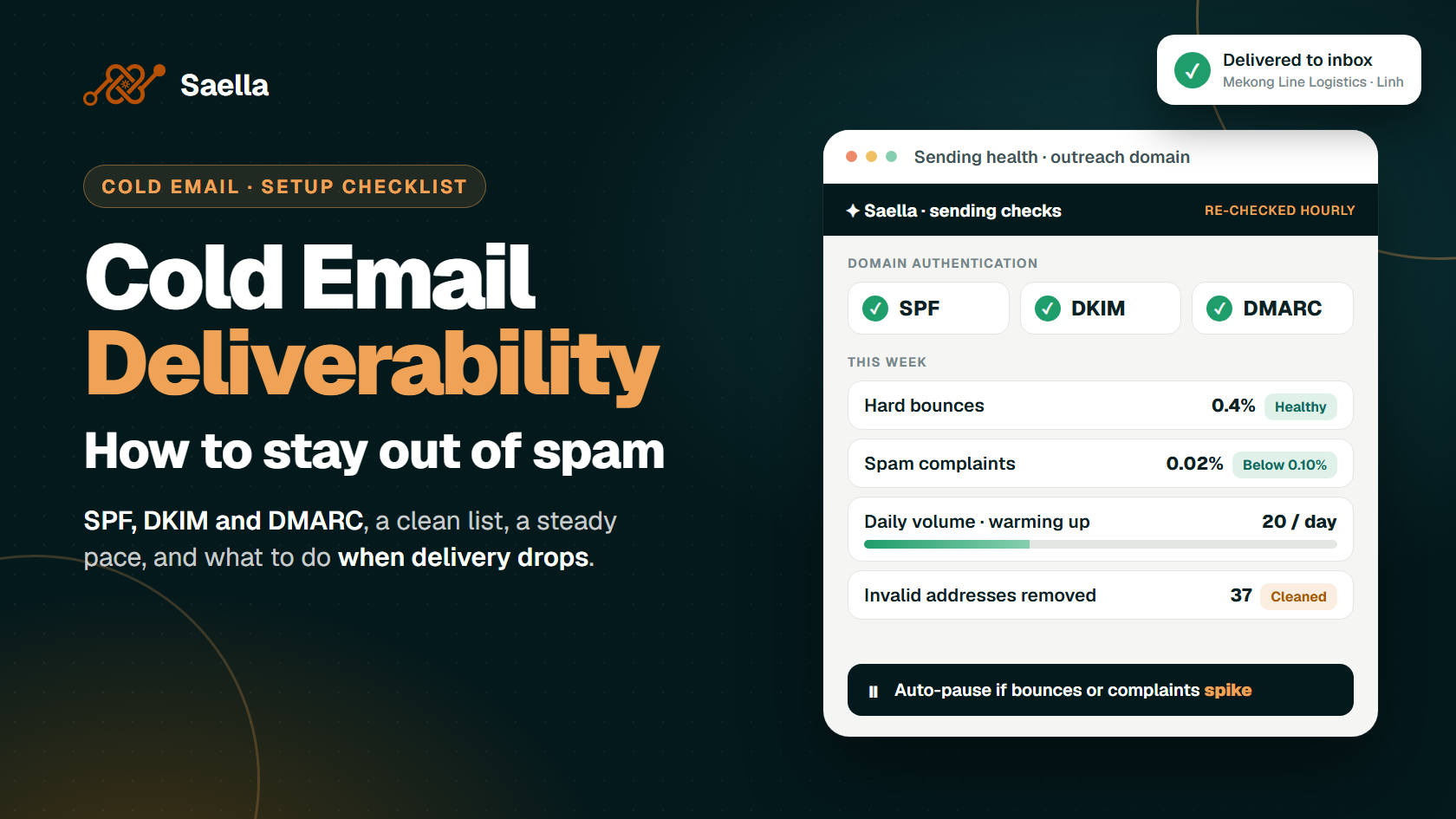
Deliverability is how often your emails reach the inbox instead of the spam folder. Send
only to people who agreed to hear from you. Use a real sender name and address. Include
a working unsubscribe link. Avoid misleading subject lines. If many readers mark your
emails as spam, mailbox providers may send your later emails to spam, too.
Watch the time to conversion
Time to conversion is how long a reader takes to reach your goal after they enter the
series. Track it for your own audience. If most readers act after email two, you may be able
to shorten the series. If most readers act only after a long gap, consider spacing your
emails further apart.
Test one change at a time
Change one element, such as a subject line or a CTA, and keep everything else the same.
Judge the result with the goal you set at the start. Treat open rates with caution, because
automated tracking can inflate them.
How Saella can help with drip campaigns
A good drip campaign starts with a clear goal, a defined audience and emails worth
reading. Saella can help you draft emails from the information you give about your
campaign and the group you select. Review each email before you send it. You can try
Saella with a business email addres.
Drip campaign FAQ
Do drip campaigns work?
They can, when the series has a clear goal, a defined audience and useful emails. Results depend on your list, your offer and your content. Set a goal before you launch, track it, and improve the series over time. Be careful with figures from vendors about how well drip campaigns work, and check the original source before you rely on them.
What should a drip campaign include?
A good drip campaign includes a single goal, a clear trigger, a defined audience, two to five emails that each have one purpose and one CTA, waiting times between emails, and an exit rule. It should also include an unsubscribe link in each email and a way to measure the goal.
How many emails should a drip campaign have?
There is no fixed number. Many campaigns use three to five emails. Add an email only when it has a clear purpose. If an email repeats the previous one, remove it.
How often should I send drip emails?
Space emails so readers have time to act. A gap of two to four days between early emails is a common starting point. Adjust the gap based on how your readers respond.
What is the difference between a drip campaign and a newsletter?
A newsletter goes to your whole list on a date you choose. A drip campaign sends a planned series to each person after they enter it, so each reader starts at the beginning.
Can I run more than one drip campaign at once?
Yes, but make sure one reader does not receive several series at the same time. Set rules that pause or end one series when another starts.
Find your next customers in Southeast Asia
Start free