B2B lead generation helps businesses find potential customers, start relevant conversations and develop sales opportunities. The process connects a clear audience, a useful offer and a practical next step.
Start with one group of businesses your product or service can help. Learn what makes them suitable customers, then decide how to reach them and which responses deserve further attention.
Finding the right prospects is only the first step. The next challenge is reaching them with a message that matters. Explore how Saella helps you discover potential business customers and connect with them through targeted email campaigns.
What Is B2B Lead Generation?
B2B means business-to-business. Your potential buyers purchase products or services for an organisation. Sales and marketing share the work of finding these buyers: marketing helps people discover and understand the offer, while sales teams start conversations, assess needs and agree on next steps. Cognism’s guide describes both teams’ roles in this process.
A B2B lead generation process should help your team answer three questions:
Who should we target? Identify businesses that could benefit from your offer.
How should we reach them? Find a suitable channel and contact.
When should sales follow up? Define the evidence that justifies a sales conversation.
A database record can help you identify a company. You still need to learn whether that company has a relevant need. For example, a logistics company may fit an accounting provider’s target industry, but the provider must check what support the business needs and who handles the decision.
What Are the Main Types of B2B Leads?
Teams use lead labels in different ways. Agree on your own definitions before comparing results.
Term | What it means |
Target company | A business that appears to match your customer criteria. You may know its industry, location and activities without having spoken to anyone there. |
Contact | A route to the business, such as a named person, department or general company inbox. |
Engaged lead | Someone who has taken a relevant action, such as replying, requesting information or asking about your service. |
Marketing-qualified lead (MQL) | A lead that meets your team’s criteria for further attention based on business fit and marketing activity. |
Sales-qualified lead (SQL) | A lead that meets your team’s criteria for a direct sales discussion. |
Define the actions and evidence behind each label. For a small team, simpler labels may work better: “needs research,” “interested,” “ready to discuss” and “outside our scope.” The useful part is knowing what happens next and who handles it.
What Makes a High-Quality B2B Lead?
High quality leads fit your business and give you a clear reason to continue the conversation. Assess four things:
Business fit: Can you serve this company’s market, industry and requirements?
The need: Has the person described a problem or goal your offer can address?
The contact’s role: Are you speaking with someone who evaluates the service, makes the decision or can introduce the relevant person?
The next step: Have you agreed on an action, such as a demonstration, quotation or review of requirements?
A catalogue request can begin this process, but it does not establish the size of a future order. A meeting request shows interest, while your team still needs to understand the buyer’s situation. Record what the person has actually said and leave unknown details open until you can confirm them.
Which B2B Lead Generation Strategies Fit Your Situation?
Choose a strategy around how your audience finds and evaluates suppliers.
Strategy | How it helps | Example |
Search and useful content | Help potential customers researching a problem discover your business. | Publish blog posts that answer questions about products, services or purchasing decisions. |
Targeted outbound | Introduce a relevant offer to selected businesses. | A packaging supplier emails suitable food businesses about a container range. |
Events and webinars | Create space for a focused discussion. | A product demonstration helps operations teams assess a process or compare solutions. |
Referrals and partnerships | Connect your offer with an existing professional relationship. | A complementary supplier introduces you to a customer with a relevant need. |
Existing relationships | Identify further needs among customers and previous enquiries. | A customer asks about another service or support in a new market. |
For search and content, relevant landing pages should explain the offer and give readers a clear next step. A reader looking for product specifications should find them easily. Someone ready to discuss a service should know how to contact you.
For outbound, the audience and offer need a clear connection. Explain why the information may be useful without claiming to know the company’s plans.
These approaches can support each other. Someone receiving an introduction email may visit your website before replying, and a useful article can help a salesperson explain the offer. Start with an approach your team can maintain, then add other channels when they serve a clear purpose.
How to Do B2B Lead Generation in Southeast Asia
1. Define your first customer group
Specify the country, industry and offer. For example, start with logistics companies in Vietnam, then check which firms could use your accounting service. This gives your team a clear research task.
Add practical limits: which services do you provide, which locations can you support, and which business types fall outside your scope? Existing customers may also need a different message from companies hearing about you for the first time.
Begin with a group your team can review and serve. Expand when the results support it.
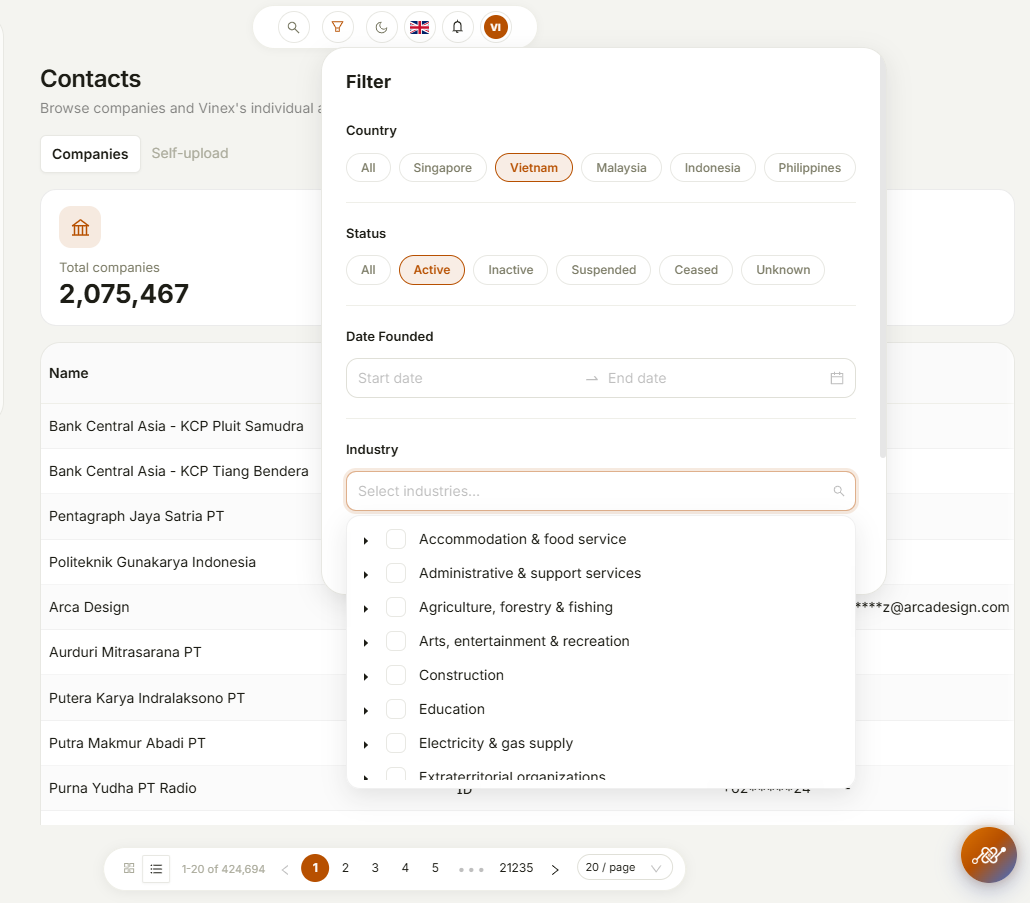
2. Find companies and check how to contact them
Potential sources include your own enquiries, referrals, industry events, company websites and a B2B database. Review the business and the contact route separately.
A general inbox may help you reach the relevant department. A named contact needs a clear connection to the company and the role you want to reach. Check important details before using them in your message; an industry label alone does not establish a current buying need.
Apply your company’s contact rules and recipient exclusions before sending.
3. Choose a useful offer and next step
Your introduction should explain:
Why the offer may be relevant.
What you provide.
What the recipient gets by responding.
A catalogue can help someone assess a product range. A specification sheet can answer a technical question, while a short discussion may help establish whether a service fits. Choose a next step your team can deliver promptly.
Avoid claiming that you noticed a problem unless you have evidence. “If you are reviewing suppliers” works when you do not know the company’s current plans.
4. Prepare and review a small campaign
Check the audience, sender, message and destination before sending. Use a group your team can review and respond to, and confirm who will handle replies and what information they need.
For email outreach, review recipient exclusions and delivery results. If people repeatedly ask what you do, clarify the offer. If responses consistently come from businesses outside your scope, revisit the audience selection.
Keep a copy of the campaign brief and record changes. This gives you a useful reference when comparing later campaigns.
5. Follow up with a reason
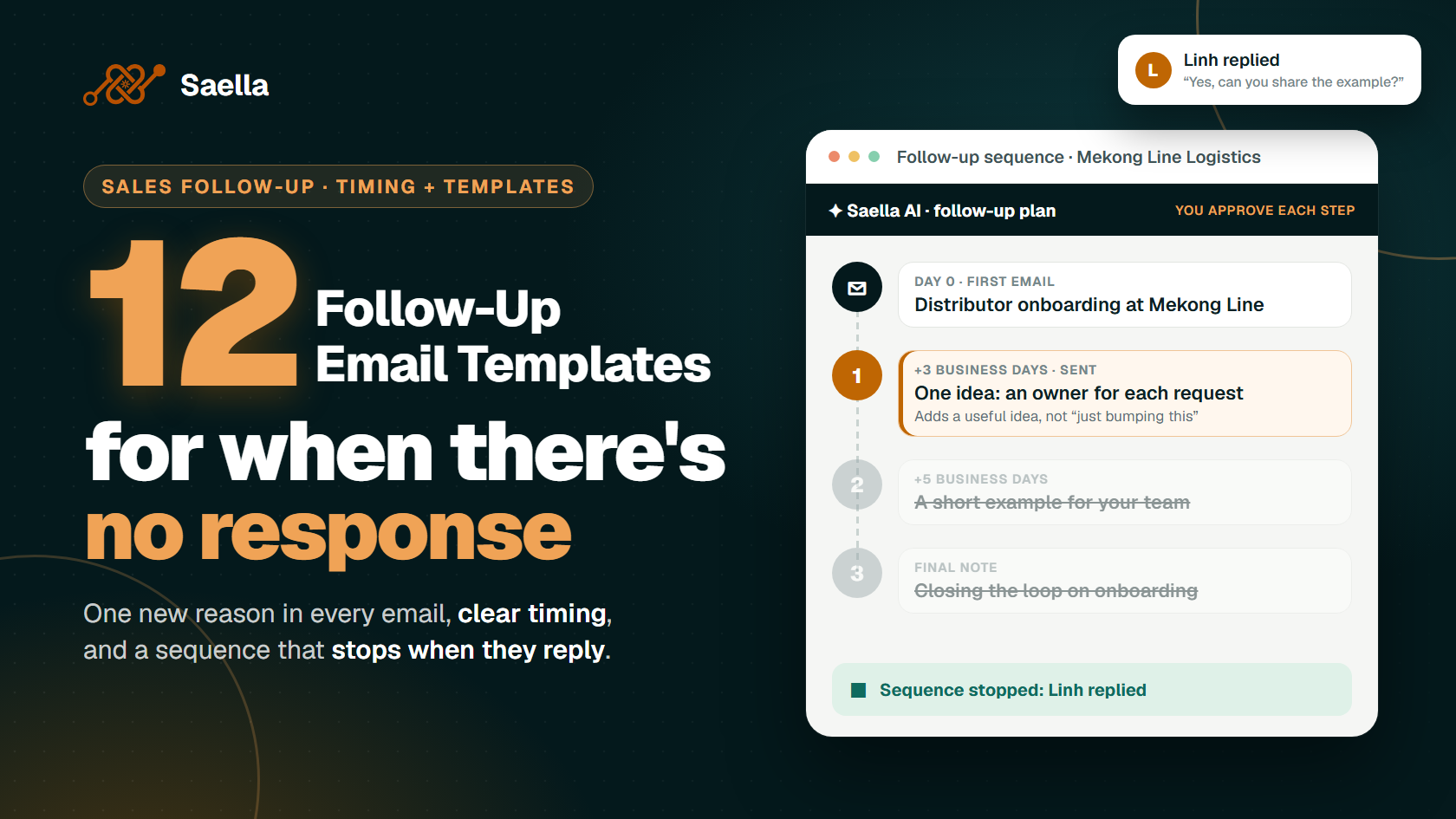
A follow-up should help the recipient make a decision. You could answer a common question, share a relevant specification or explain the next step more clearly.
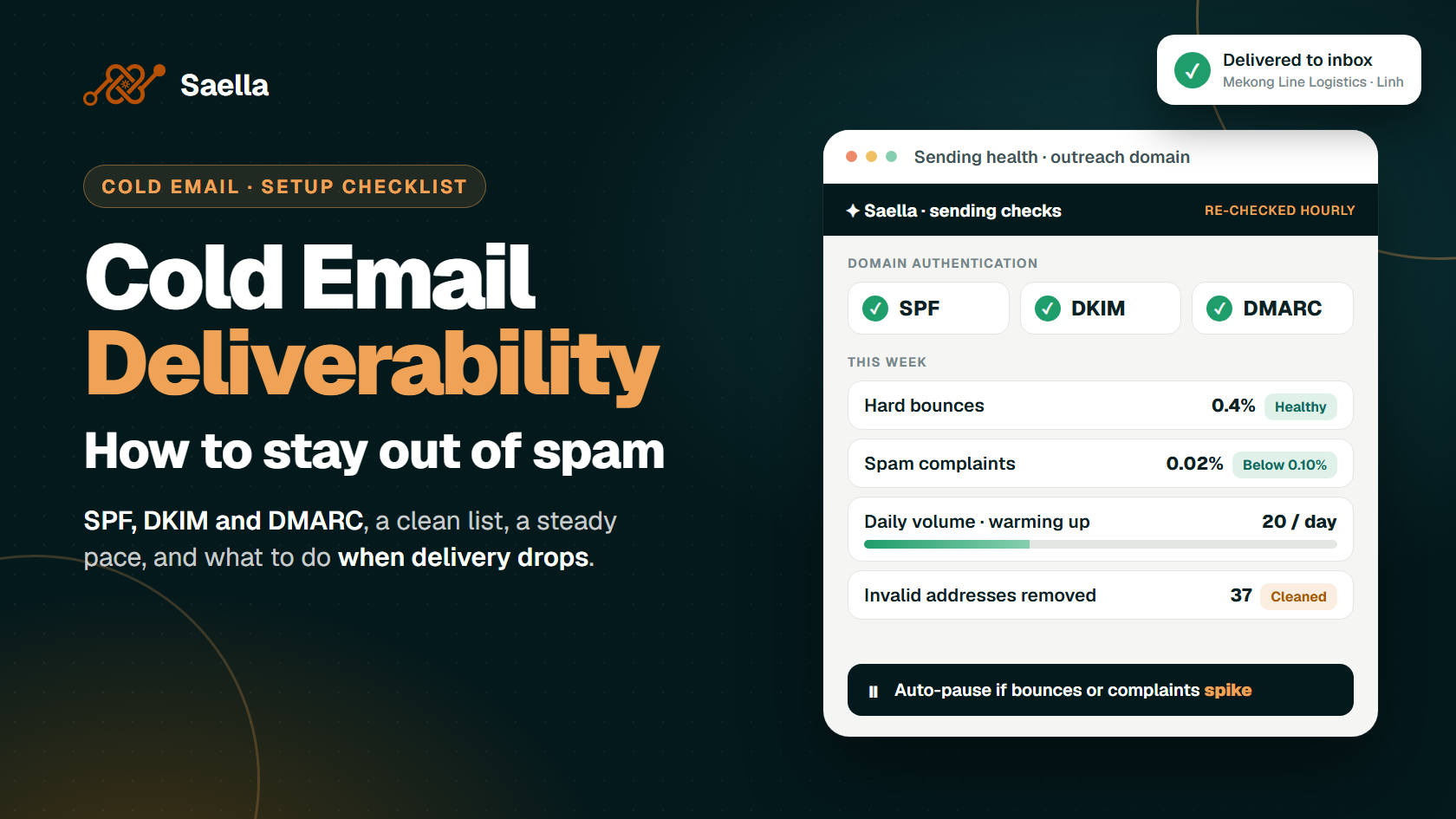
Automated follow-ups need conditions, delays and stop rules. When someone replies, let a team member handle the conversation. Remove unsubscribed and hard-bounced addresses from future campaign sends; a hard bounce indicates a permanent delivery failure.
Keep the sequence proportionate to the offer. Repeated reminders cannot resolve a weak audience match.
6. Check the fit and assign the next action
When someone responds, learn:
What the business wants to achieve.
Whether your offer fits its needs.
Who helps evaluate or approve the purchase.
What timing or delivery limits matter.
What both sides should do next.
This review is often called lead qualification. A simple team record may be enough: include the person’s request, relevant context, next action and owner. Forwarding an email address alone leaves the next person to repeat the research.
What Does a Relevant Outreach Campaign Look Like?
Consider this illustrative example: a Singapore packaging supplier wants to introduce its takeaway-container range to food businesses in Malaysia. It can provide a current catalogue and product specifications.
The team first selects businesses that could use the products. It reviews the companies and removes those outside its scope. The introduction focuses on one offer: the catalogue.
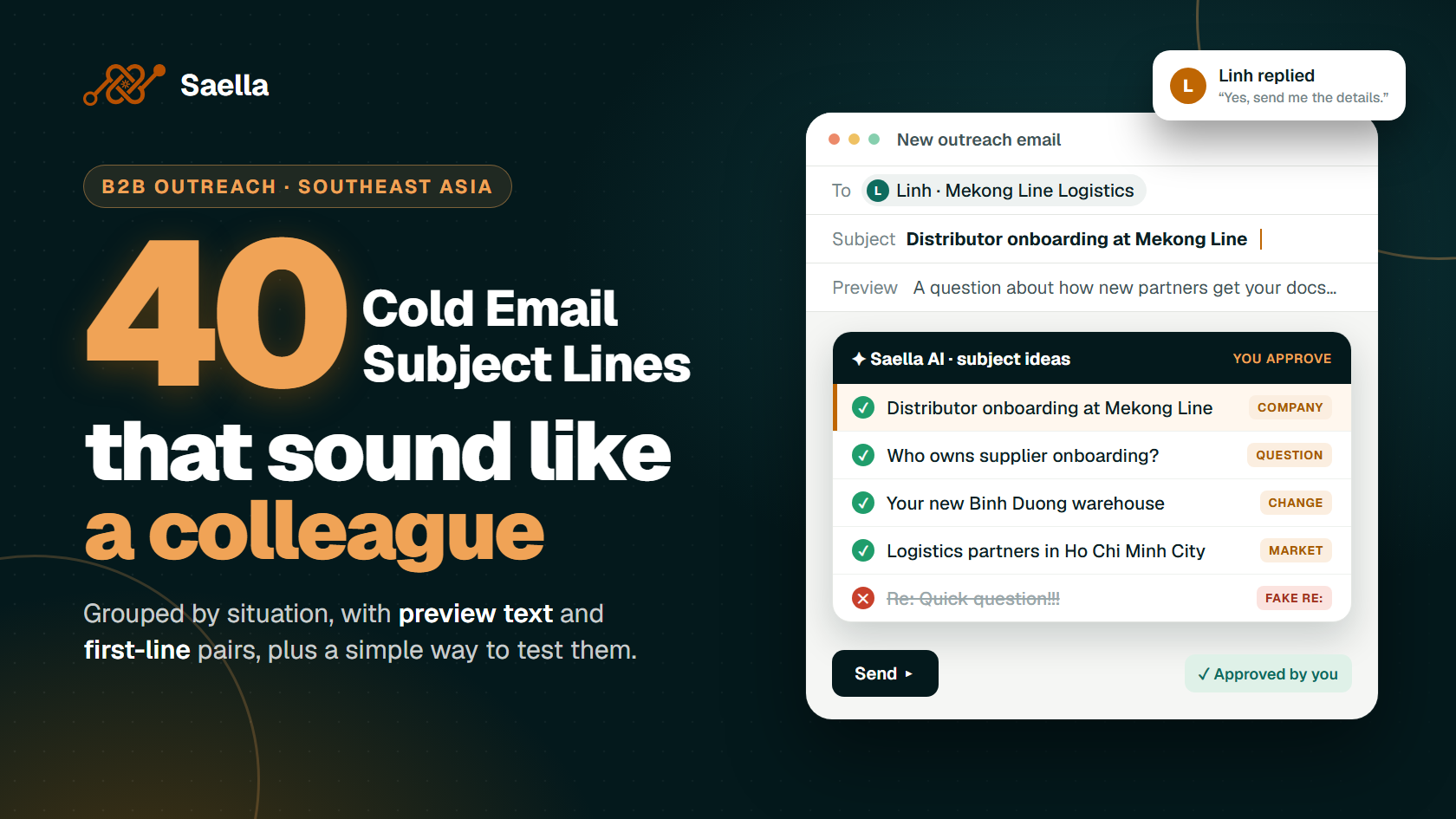
Subject: Takeaway-container options for your menu
Hi there,
We supply takeaway containers and are introducing our range to food businesses in Malaysia.
If you are reviewing packaging for your menu, our catalogue includes the available sizes and product specifications.
Would you like a copy?
Best,
The packaging team
Before sending, the supplier confirms product availability and assigns someone to answer requests. When a person replies, the team asks about intended use, quantities and other requirements. These details help it decide whether to prepare a quotation.
This example shows a process. It does not represent a customer campaign or an expected response rate.
How Does Lead Nurturing Help After the First Response?
Lead nurturing helps interested people evaluate your offer over time. Someone may request a catalogue before knowing the required quantities, or a service buyer may need to discuss the proposal with a colleague.
Match your follow-up to the question still open:
They need product details: Send the relevant specifications.
They are comparing service scope: Explain what your offer includes.
Their timing remains uncertain: Agree on a suitable time to reconnect.
Keep a record of what you have already shared. This helps your team avoid repeating the same introduction. Useful follow-up content can include approved examples, product guides, service explanations or answers to common questions. Use evidence your business can support.
The aim is to help the buyer reach a decision and identify when a direct conversation would be useful.
Where Can AI Help with B2B Lead Generation?
Tools powered by AI can help with research, content and campaign tasks. Their value depends on the information and functions they can access.
In Saella, you can describe the audience you want to reach. The assistant can help create the campaign and draft the email. You can then review the proposed recipients and ask for campaign results.
Useful requests include:
“Help me prepare a campaign for logistics companies in Vietnam.”
“Rewrite this introduction using the approved service description.”
“Show the results by template and batch.”
“Which results should we investigate before the next campaign?”
Check the audience filters and generated content. Do not let missing information become an assumed budget, an invented business problem or an unsupported claim that someone is ready to buy. Your team still needs evidence from the company’s situation and the conversation.
How Saella Supports B2B Outbound Lead Generation
Saella connects business discovery with email campaign preparation and reporting. Its business data covers Vietnam, Singapore, Malaysia, Indonesia, the Philippines and Thailand. Users can search with supported business filters, including country and industry, or work with their own contacts.
Campaigns hold the targeting, templates contain the email content, and batches record individual sends. You can ask Saella’s assistant to help with these steps. Saella uses approval controls for key actions, including campaign creation, template changes and sending.
Before sending, the system checks addresses and removes suppressed recipients. It then releases emails through a paced queue. Reports show deliveries, engagement and replies, while Saella filters identified machine traffic from open and click metrics.
The campaign system also supports recurring schedules and follow-up chains with configured conditions. Your team handles the offer, assesses responses and manages the sales conversation.
Which B2B Lead Generation Metrics Should You Track?
Connect campaign activity with the outcome you want.
Metric | What to record | What it helps you assess |
Companies reviewed and accepted | Businesses checked and those meeting your criteria. | Whether your sources produce a relevant audience. |
Delivered emails | Messages delivered and delivery failures. | Whether delivery issues need attention before you expand. |
Genuine replies | Human responses, counted separately from automatic replies. | Whether people responded to the campaign. |
Relevant sales conversations | Responses matching needs your business can serve. | Whether the campaign attracts suitable potential customers. |
Meetings and agreed next steps | Specific actions agreed with prospects. | Whether interest moves forward. |
Opportunities and customers | Outcomes recorded in your team’s sales process. | Whether the work contributes to business results. |
State which count you use when calculating a rate. Suppose a campaign delivers 100 emails. Eight people reply, and four fit your sales criteria:
Reply rate: 8 ÷ 100 = 8%.
Relevant sales conversations per delivered email: 4 ÷ 100 = 4%.
These numbers illustrate the calculation. They are not performance targets.
Also track the effort involved, including research, content review and time spent handling responses. Opens and clicks can help identify questions to investigate, but they do not establish whether a person is a suitable customer.
Use the full picture to choose the next change: the audience, offer, message or follow-up process.
B2B Lead Generation FAQs
Can a small business generate B2B leads without a large sales team?
Yes. Start with one customer group, one clear offer and a process your team can manage. Assign someone to review the audience, handle replies and record next steps. Keep the campaign small enough to give interested prospects proper attention.
Do I need a CRM to start B2B lead generation?
You can begin with a shared record of companies, contacts and conversations. Include the source, current status, responsible person and next action. A CRM becomes more useful when several people manage leads or when tracking conversations manually becomes difficult.
How many companies should I contact in my first campaign?
Choose a group you can review carefully and follow up with. The right size depends on audience relevance, available contact details, sending limits and your team’s capacity. Use the first campaign to check the audience and offer before expanding.
How long does B2B lead generation take to produce results?
There is no fixed timeline. A reply, a meeting and a completed sale represent different stages. Track progress against your own sales cycle, and allow time for prospects to evaluate the offer. Early responses can help improve the campaign before sales results become clear.
Can I use my existing contacts in Saella?
Yes. Saella supports a contact book for your own contacts, alongside its business database. You can use those contacts in email campaigns and tailor the message to the existing relationship. Review recipient exclusions before sending so you respect previous opt-outs and delivery issues.
Start with One Audience in Saella
Choose a country, an industry and an offer your team can deliver. Use Saella to identify relevant businesses and prepare an introduction with AI assistance. Review the audience and message before sending, then use the responses to decide whom to follow up with and what to improve.
Find your next customers in Southeast Asia
Start free