Lead nurturing emails help someone work through a buying decision over time. A useful series answers the questions they are likely to have, gives them evidence they can check and invites a conversation when it would actually help.
This guide distinguishes nurturing from a direct follow-up and develops seven email types, examples and a three-email B2B sequence. It also explains how to match content to the lead's decision stage and measure whether the messages produce useful conversations.
What are lead nurturing emails
A lead has shown some interest, perhaps by downloading a guide or joining a webinar. That does not tell you whether they have a budget, a clear need or a decision date, so use the next emails to help them work through those questions.
Treat the series as a sequence of answers to the lead's questions. An early email may explain the problem; a later one may show how a solution works or invite a conversation. The lead can then decide whether the offer is relevant before speaking with sales. Our B2B lead generation guide shows how nurturing helps after a prospect's first response.
Lead nurturing email vs. follow-up email
A follow-up picks up a specific conversation, meeting or inquiry and usually has an immediate next step. A nurturing series helps with a broader decision over time, including when the lead has not yet spoken to anyone on your team.
A direct follow-up can be personal and time-sensitive: it might send the information promised during a meeting and ask for a specific response. Its value depends on accurately reflecting that conversation.
A nurturing series serves a group with a shared need, using guides, examples and invitations at appropriate intervals. It still needs a way to stop or hand over when a lead responds and the conversation becomes individual.
Choose based on the information you have. If a person asked a specific question, answer it directly; if they are exploring a wider problem, a short sequence can help them frame their options before a call.
Benefits of lead nurturing emails
Lead nurturing emails let you:
1. Send your sales team leads who already know your offer.
When a lead has already read a useful explanation, your sales call can focus on fit, constraints and implementation instead of starting with definitions. Check whether the conversations become more useful, not just whether more emails go out.
2. Get more from the leads you already have.
Writing to people already on your list can be more efficient than finding new leads, but only when the emails address a need they still have. Sending a longer series to people who are not interested will not make it more valuable.
3. Help leads decide whether you are the right fit.
A series can clarify both who the offer serves and who may need a different approach. Helping a lead recognize a poor fit early can save an unproductive sales discussion for both parties.
4. Stay in touch without calling every week.
Long B2B decisions often involve internal reviews and changing priorities. A measured sequence can remain useful between conversations, while the sales team concentrates on replies, requests and accounts with a defined next step.
These benefits depend on the quality of your content and your list. Track your own results rather than relying on industry numbers.
7 types of lead nurturing emails with examples
Mix several types in a series. The example subject lines below are invented to show the style.
Welcome email. Greet the lead and say what comes next. For example, use "Welcome, Linh" as the subject and explain the series in the message.
Testimonial email. It shows what a customer said, with their permission. A subject line could read "How a small clinic handled missed appointments."
Case study email. It walks through a real situation and its result, for example under the subject line "Case study: moving a team from spreadsheets to one tool."
Event invitation. It invites the lead to a webinar or workshop, as in "Join our free workshop on 29 October."
Immediate-value email. It gives a useful tip, checklist or template right away, such as "A one-page checklist for your next audit."
Newsletter. It shares regular updates and useful reading, for example "This month: three ideas for tidier month-end closing."
Drip sequence. It sends a planned series of short emails, each building on the last, as in "Part 2 of 4: choosing a first process to automate."
Use testimonials and case studies only when they are real, and when you have permission to share them. If you do not have one yet, share a how-to article instead. Never invent a customer or a result.
Example: an immediate-value email (invented)
Hi Linh, you downloaded our guide to month-end closing last week. Many small teams get stuck on the same step: matching bank records to the ledger. Here is a one-page checklist for it. It takes about ten minutes to try. If you want to talk it through, just reply. [Get the checklist]
The message follows the context of a requested resource and offers one practical application. A monitored reply address also turns a general tip into a way to discover where prospects still need help.
Example: an event invitation (invented)
Hi Mai, we are running a free 45-minute workshop on Thursday 29 October at 7 pm. It covers how small teams can set up a simple monthly closing routine. You will leave with a checklist you can use the next day. Seats are open to all subscribers. [Reserve a seat]
The invitation specifies the time commitment, topic and usable output. These details help a reader decide whether attending is worthwhile; unsupported scarcity would only make that decision less informed.
Example: a how-to email in place of a case study (invented)
Hi Mai, a question we hear often is how long it takes to move from spreadsheets to a shared tool. The answer depends on your team, but most of the work is the same: list your processes, pick one and test it for a week. Here is a short guide to each step. [Read the guide]
Without a documented customer result, a how-to article can still help someone act. It demonstrates your approach without presenting an invented testimonial as evidence.
Make the advice concrete enough to try, then link to the complete steps. The educational value should stand on its own even if the lead is not ready to speak with sales.
How to build an email nurture campaign
An email nurture campaign connects audience selection, message order, timing and sales handover to one intended outcome. Make those decisions together so the sequence does not continue after a lead asks for individual help.
1. Choose the audience. Group leads around a shared need or signal, such as downloading a particular resource, and exclude contacts whose circumstances call for a different conversation.
2. Set the goal. Define the action that would show progress, for example booking a suitable call, and decide which event will remove the lead from the automated path.
3. Plan the sequence. Put the reader's likely questions in order, assign one question to each email and give enough time for the previous message to be considered before sending the next.
4. Write and test. Draft the messages, check every link and test merge fields such as [First name] with complete and incomplete records. Personalization should remain legible when an optional field is blank.
5. Review and update. Compare replies and qualified conversations with the campaign goal, then revise messages whose content or assumptions no longer match the audience.
A 3-email lead nurturing sequence template
Use this sequence for a B2B lead who downloaded a resource but has not spoken with sales. Send the emails a few days apart, then adjust the gaps to your sales cycle. The examples are invented.
Email 1: Value first
Subject line: A quick tip to get more from [resource name]
Hi [First name], thanks for downloading [resource name]. Many readers find the quickest win in [section or idea]. Here is a short note on how to apply it. [CTA: Read the note]
Email 2: Case study or social proof
Subject line: How [type of company] solved [problem]
Hi [First name], here is how [real customer or clearly labeled example] handled [problem]. They started by [step], and then [step]. The details are here. [CTA: Read the story]
Replace the placeholder with a real customer story you have permission to use. If you have none, use a clearly labeled example and say it is hypothetical.
Email 3: Invitation to talk or attend
Subject line: Would a short call help with [problem]?
Hi [First name], over the last few emails, we covered [topic one] and [topic two]. If you would like to see how this could work for [their situation], I can walk you through it in 20 minutes. Which day suits you? [CTA: Book a time]
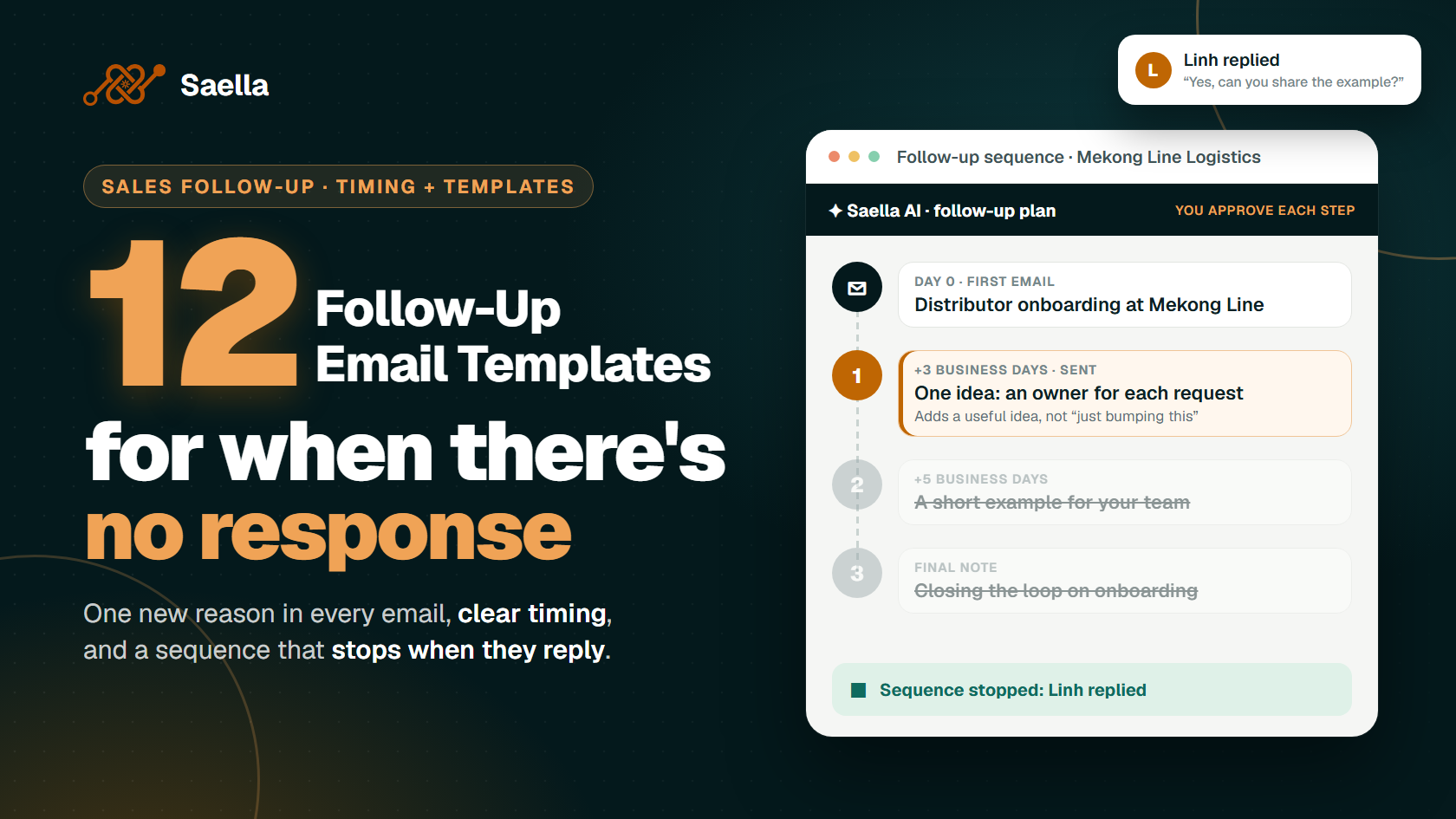
Add an exit rule. Once a lead books a call or replies with a specific question, move them to an individual follow-up and stop the generic series. This prevents an automated invitation from colliding with an active conversation. Our drip campaign guide explains how to build the series.
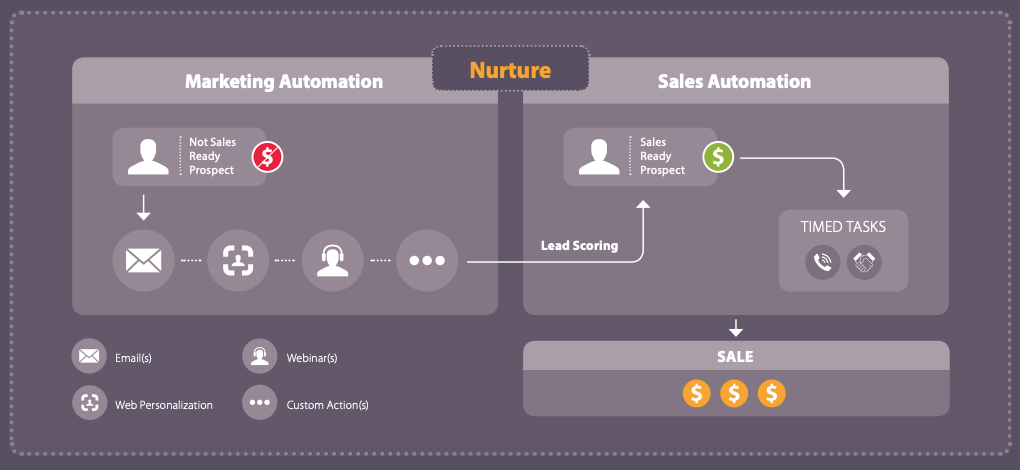
Match the funnel stage to the email type and CTA
A lead's stage is a way to describe the question they are trying to answer, not a permanent label. Watch what they ask for and what they do next, then change the content or move to a personal reply when the situation calls for it.
At first, a lead may be trying to name the problem. Later they compare options and evidence; near a decision, they want to know about fit, cost or implementation. A demo invitation can feel too early in the first stage, while another beginner guide may add little after a pricing request.
Awareness. The lead needs to understand the problem. Welcome emails, newsletters and immediate-value emails fit best here, and the typical CTA is "Read the guide."
Consideration. The lead wants to compare options and see proof. Case studies, testimonials and event invitations do that work, usually with a CTA such as "Watch the webinar."
Decision. The lead wants to check fit and talk to a person. A demo invitation or a personal follow-up fits, and the typical CTA is "Book a call."
Use the next unresolved question as the organizing principle. The CTA should extend the answer in the email, whether that means reading a guide, reviewing a credible example or scheduling a conversation.
Lead nurturing email best practices
1. Segment by intent. The action a lead takes can indicate what they need next: a beginner guide suggests exploration, while a pricing inquiry may call for a specific answer. Treat these as useful signals rather than proof of a purchase decision.
2. Personalize with care. Use details you actually have, and set fallbacks for missing data.
3. Use one CTA per email. A single clear action is easier to follow than several.
4. Choose the timing deliberately. Space emails so leads have time to read and act.
5. Send more than one email. Most leads need several touches before they act.
6. Test one change at a time. Change one element, such as the subject line, and keep the rest the same.
7. Keep the series current. Update the content when offers, products or prices change.
8. Stop when the lead is ready. Move engaged leads to your sales team and remove them from the series.
Metrics to track for lead nurturing emails
Select measures that match the series' objective. Automated loading can inflate open counts, so use replies, relevant clicks and sales conversations to assess whether the content advances an actual decision.
Click rate shows whether readers follow the proposed link, but it does not establish that they found the linked material useful. Examine subsequent action where it is measurable.
Reply rate tells you whether leads engage in conversation.
Conversion to a sales conversation measures the share of eligible leads who reach a suitable discussion. Define what qualifies as a conversation before interpreting the result; a booked call and a substantive exchange may represent different outcomes.
Unsubscribe rate tells you whether the emails match what leads expected.
Time from first email to first conversation can reveal whether information arrives before a lead needs it. Compare similar lead groups before crediting a faster response solely to the email series.
Compare results with your own previous sequences and similar entry sources. Broad industry benchmarks often combine audiences with different buying cycles, which makes them weak evidence for your specific campaign.
Common lead nurturing email mistakes
• Selling in every email. Leads stop reading when each message is a pitch.
• Treating every lead the same. A lead from a pricing page needs different emails from a lead who downloaded a beginner guide.
• Inventing proof. Fake testimonials and made-up results damage trust and may break advertising rules.
• Forgetting to stop. A lead who already booked a call should not get another invitation.
• Writing long emails. Keep each email to one idea and one CTA.
• Never checking the data. Old or wrong contact details lead to bounces and awkward emails. Our B2B database guide explains how to keep records current.
Nurture leads with Saella
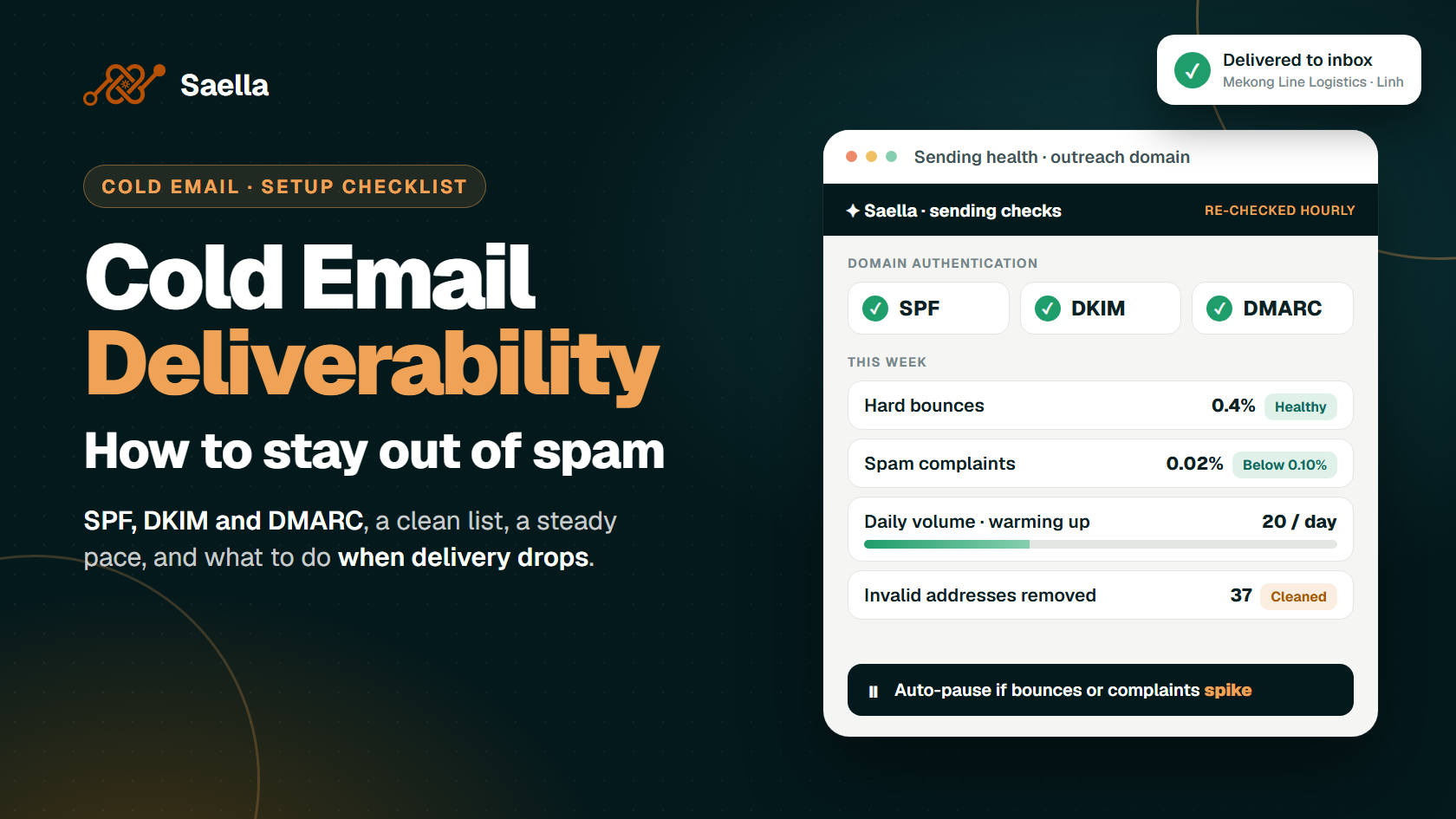
Nurturing works best when each email has a clear job. Saella can help you draft emails from the information you give about your campaign and the group you select. Review each draft before you send it. You can try Saella with a business email address.
To see how nurture series fit into a wider setup, read our email automation guide.
Lead nurturing emails FAQ
How many lead nurturing emails should I send? There is no fixed number. Many B2B series use three to six emails. Add an email only when it has a clear purpose and gives the lead something new.
How long should a lead nurturing sequence last? Match the length to your sales cycle. A short sales cycle may need a few weeks. A long one may need several months, with a longer gap between emails.
What is the difference between a lead nurturing email and a follow-up email? A follow-up email responds to a specific moment, such as a meeting. A lead nurturing email belongs to a planned series that builds trust over time.
What should I send first to a new lead? Send something useful that relates to what the lead did, such as the resource they downloaded. Thank them, give one tip and state what to expect next.
Can I use case studies if I have no customers yet? Not as real case studies. You can share a how-to article or a clearly labeled hypothetical example. Never invent a customer or a result.
When should a lead leave the nurture series? A lead should leave when they reach the goal, for example by booking a call, or when they unsubscribe. Move engaged leads to a personal follow-up from your sales team.
Find your next customers in Southeast Asia
Start free