A B2B prospecting tool helps a team find relevant companies, identify the right people, prepare an approach and track what happens next. Some tools focus on company and contact data; others handle email sequences or a broader workflow. For Southeast Asia, the useful question is not which vendor has the biggest global database. It is whether the tool returns usable records in your chosen market, industry and customer segment.
One missing field can make a large list surprisingly small. A company record may tell you that a distributor exists, but without a usable way to identify the appropriate team or verify its current activity, it is not yet an outreach plan. Start with a market and a buyer, then test the tools against that task.
What Does a B2B Prospecting Tool Actually Do?
Prospecting has four steps: find companies, qualify their fit, reach the appropriate person and record the outcome. You may use one platform or combine several. A company database helps with the first two; a contact provider may help with the third; an outreach or CRM tool manages messages and follow-up. A large contact count tells you little about how well a tool covers one narrow industry in Vietnam or Malaysia.
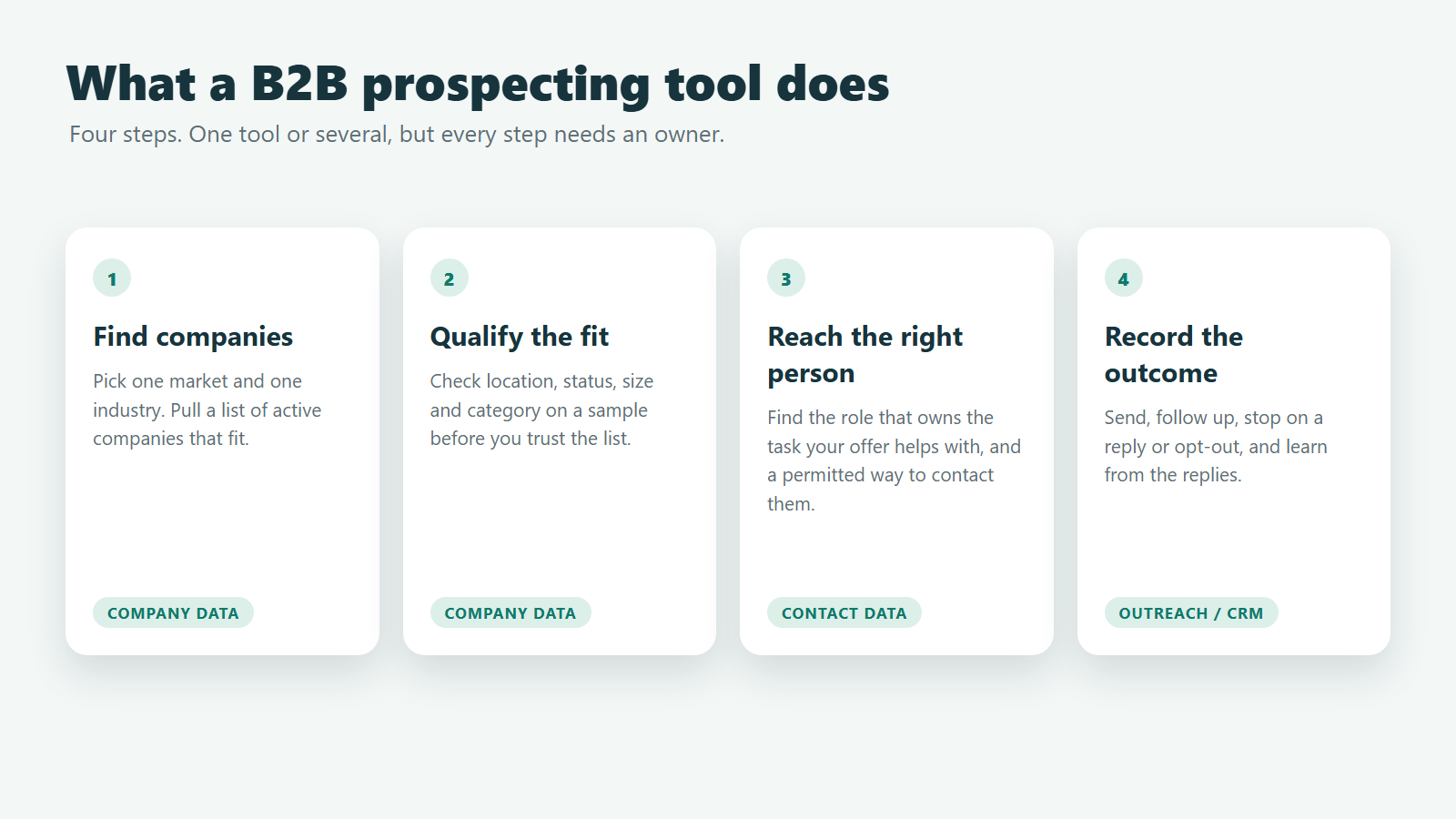
Company data and person data also answer different questions. Company name, location, industry and status help you decide whether an account fits. A work email, role and evidence that someone owns the relevant task help you decide whom to contact. Check the source, age and permitted use of each field rather than assuming every exported record is ready for a campaign.
Which Types of Prospecting Tools Should You Compare?
Southeast Asia-Focused Company and Contact Data
The Grid describes its service as company and people data focused on Southeast Asia and ANZ, with its public site specifically discussing Singapore, Malaysia and other markets. Firmable describes regional B2B company and contact data; its own support update names Singapore, Malaysia, Indonesia and the Philippines as markets in its Southeast Asia expansion. These are vendor descriptions, not an independent guarantee of coverage for your exact segment. Ask each provider to demonstrate a sample in the countries and industries you need.
Best fit to test: Your priority is depth in a particular Southeast Asian market, including local company names, relevant categories and usable contacts.
Global B2B Databases
Apollo and ZoomInfo provide broad sales prospecting platforms. Their global scale can be useful if you sell across several regions. For a Southeast Asia campaign, test actual results country by country. Do not treat global totals as a measure of how many current contacts they hold for a specific Vietnam logistics niche.
Best fit to test: You need one workflow for multiple regions and can validate local coverage before committing to a plan.
Outreach and Sequencing Tools
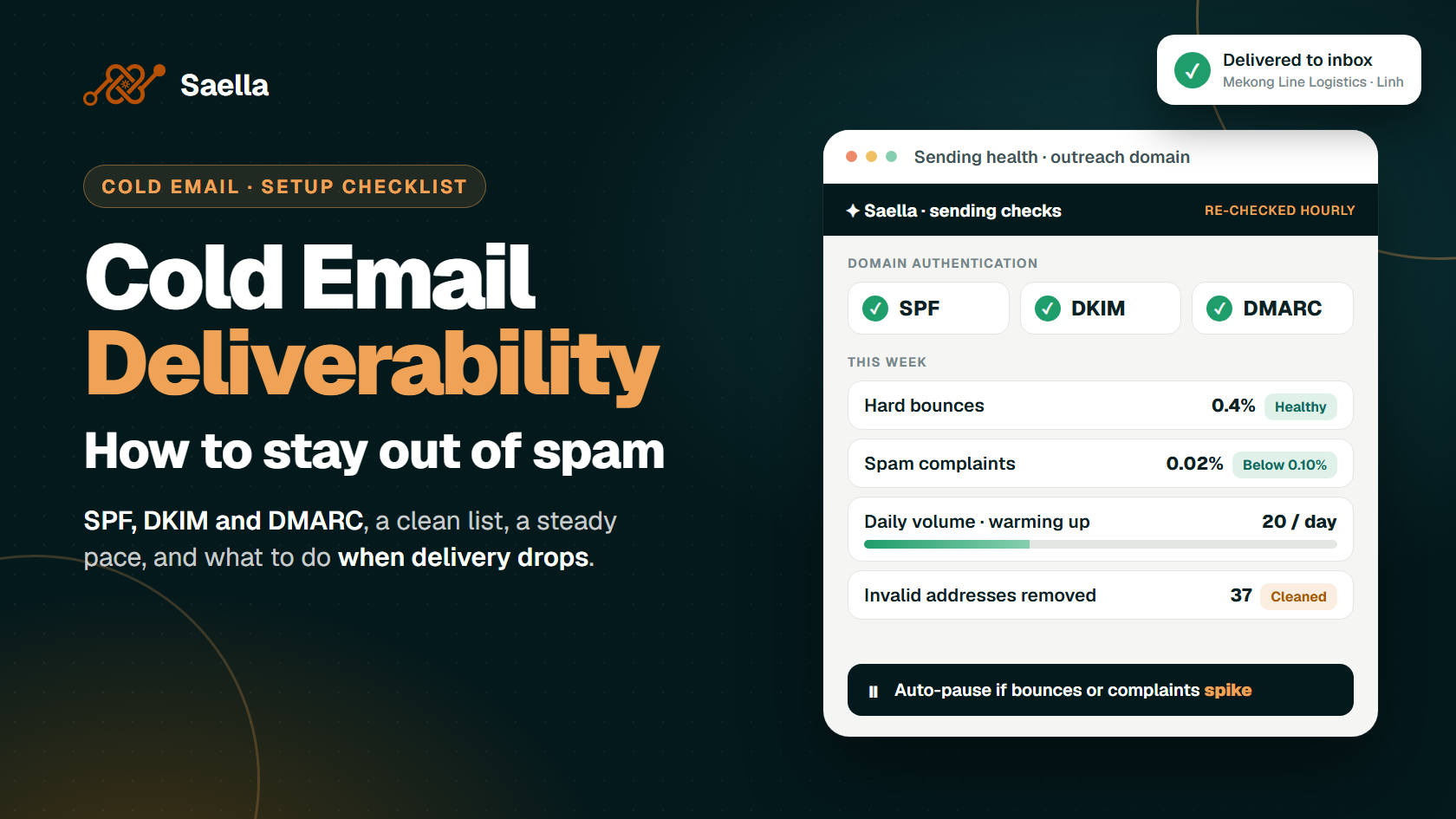
An outreach tool can send planned messages, space follow-ups and show replies or delivery problems. For example, Instantly’s product guidance describes how its sequences keep follow-ups in the original conversation. A sequence tool does not automatically solve the earlier problem of selecting the right companies. Check whether it includes data or requires an import, and how it handles replies, bounces and opt-outs.
Best fit to test: You already have an appropriate prospect list and need controlled outreach and follow-up.
A Connected Data-to-Outreach Workflow
Saella combines business data, target-group selection, AI assistance with email drafts, campaigns and follow-ups. Test the specific markets, fields and account limits you need in the current product. Ask for the current coverage of your target market rather than relying on a headline company count.
Best fit to test: A small team wants to move from a selected group of companies to reviewed outreach without building every step in separate tools.
How Do You Choose a Tool for Vietnam, Malaysia or Another SEA Market?
Start with the market you intend to sell into. Search a narrow, realistic segment in a trial or vendor demo: for example, logistics operators in Vietnam or distributors of a specific product category in Malaysia. Review 30–50 results yourself. That sample will tell you more about practical fit than an all-market headline count.
Check the following in order:
Market coverage: Does the tool have useful records for the exact country, city and segment? Ask what “coverage” includes.
Company versus contact fields: Can you identify appropriate accounts and a responsible role? Are contact details available for your plan and permitted use?
Industry categories: Does the tool’s classification describe businesses accurately across countries? A local distributor may not be grouped under the label you expected.
Freshness: What is the source and last update for the fields you will rely on? Check a sample against current company websites or registers.
Workflow: Can you review and edit a list, draft relevant messages, schedule follow-ups and stop on replies or opt-outs?
Commercial terms: How are seats, exports, credits, email sends and overages priced? Confirm the current quote directly rather than relying on a comparison article.
Data and marketing rules: Identify the source and lawful use of contact information in each market. Having an email address does not, by itself, settle whether and how you may send marketing.
If one tool is strong on Singapore contacts but weak on the Vietnam segment you actually need, use that result in the decision. “Covers Southeast Asia” should not be treated as a single yes-or-no feature.
How to Find B2B Leads With a Small-Team Workflow
Illustrative example: A software supplier wants to speak with logistics companies in Vietnam. It chooses Vietnam as the first market and identifies a service and company profile relevant to its offer. It uses a prospecting tool to collect a few hundred candidate companies, then reviews a smaller sample for current activities, duplicate records and suitable roles. A few hundred is a planning example, not a target to send to automatically.
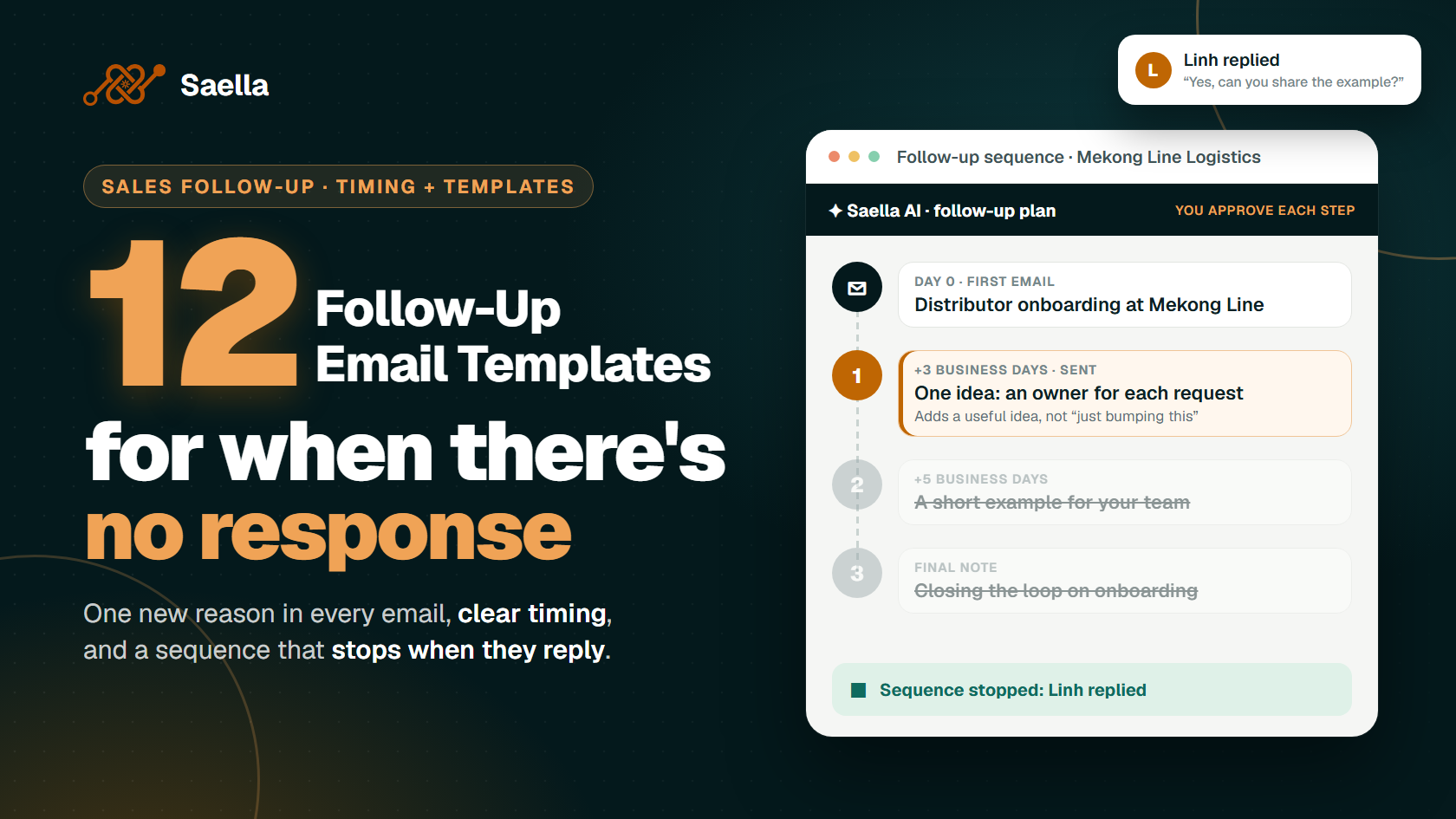
The team writes one short introduction that asks about a genuine logistics handoff. It tests the message on an appropriate group, reviews replies and delivery issues, and sends one or two useful follow-ups where permitted. It stops messages after a decline or opt-out. The next list is adjusted using what the first group taught the team about fit.
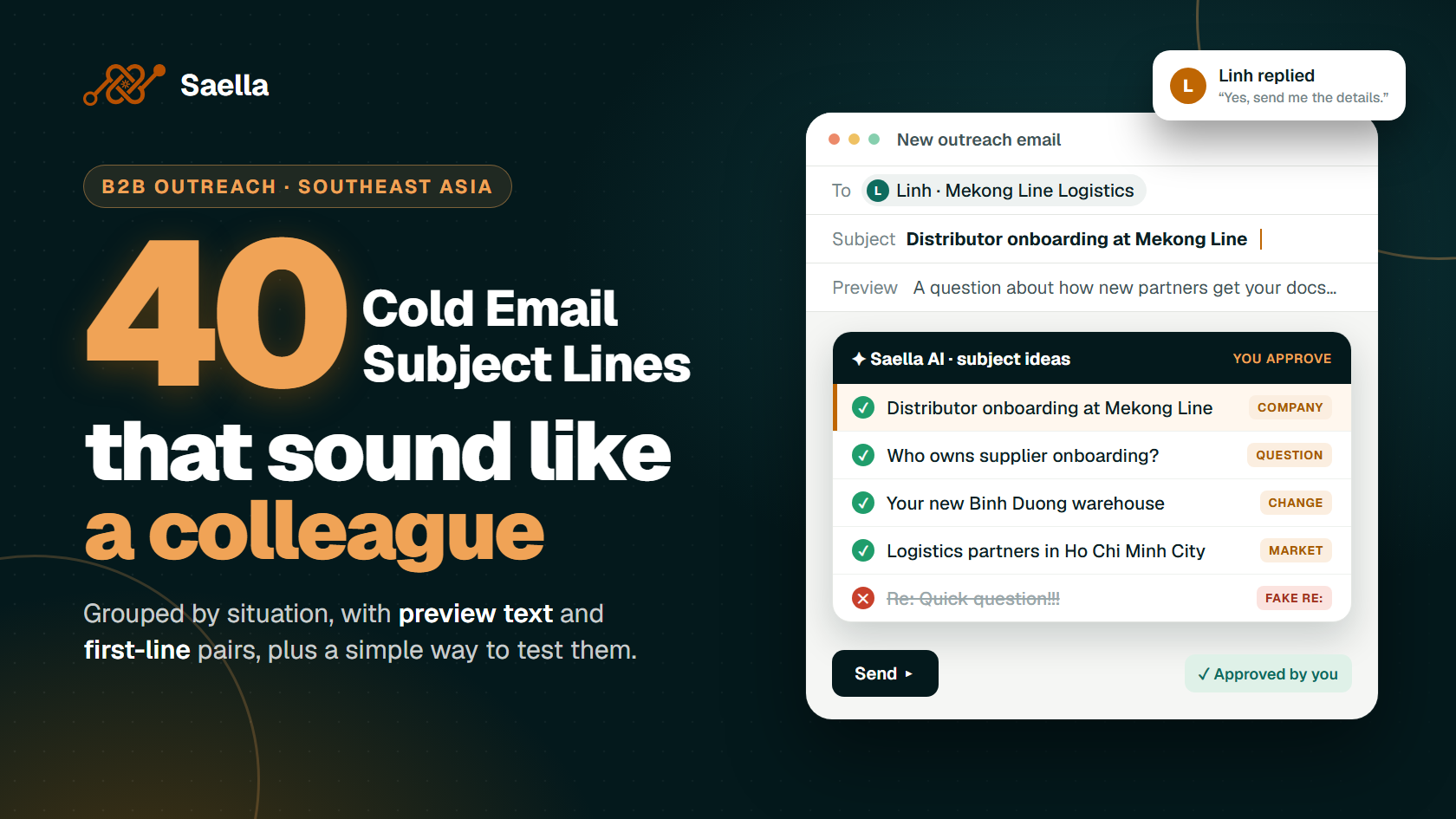
This sequence turns “find leads” into five decisions: which market, which company, which person, which reason to write and what to do after the first response. The companion guides on B2B cold email templates, subject lines and sales follow-up emails cover the writing and sequence in more detail.
A Short Checklist Before You Buy
Ask a vendor to show the results for one real target segment and answer:
How many of the sample records are current, relevant and unique?
Which fields come from company sources, and which are inferred or supplied by a partner?
Can the tool show the specific contact role you need without assuming that every listed person is a buyer?
Can you remove incorrect records, suppress opt-outs and export only what your team is allowed to use?
Does the quoted price cover the volume, countries, seats and follow-up steps in your plan?
Record the answers before choosing. A useful tool is the one that helps your team reach a qualified conversation with a process it can maintain.
Frequently Asked Questions
Are free B2B prospecting tools enough for a small team?
They can be enough to test a narrowly defined market. Check current trial or free-plan limits, data access and export terms on the vendor’s own site. A free account with little relevant data is not necessarily the lowest-cost choice.
What is the best prospecting tool for Vietnam or Malaysia?
There is no reliable single answer for every industry. Test a sample in the exact country and category you sell to, then compare freshness, contact usefulness, outreach workflow and total cost. A provider’s regional claim is a starting point for a demo, not proof that your segment is covered.
Do I need company data or contact data first?
Define suitable companies first, then find the role responsible for the task your offer addresses. A long list of people at unsuitable companies wastes time; a company list without a route to the relevant person is not yet ready for outreach.
Can I email every business contact in a database?
No blanket conclusion follows from having access to a record. Check the applicable privacy and marketing rules, the data source and the recipient’s market. Make it easy to object and honour that choice. Separate the decision to find a company from the decision to contact a person.
Start With a Market, Then Build the Outreach
Saella helps a team select a target group from business data, prepare email content with AI assistance and plan a campaign. Begin with one Southeast Asian market, one industry and a clear reason those companies might care. Review the records and every message before sending; then use the replies to improve the next group.
Find your next customers in Southeast Asia
Start free